A sincere apology is not about finding the most dramatic words. It is about owning what happened, recognizing the hurt you caused, and saying clearly what you should have handled differently. These apology messages for him include heart-touching apologies, sorry messages after a fight, longer I’m sorry paragraphs, romantic ways to say sorry, deep emotional apologies, messages for hurting his feelings, and short texts. You can send them through SMS, WhatsApp, Messenger, email, a card, or a handwritten note, choosing the words that best fit what actually happened between you.
I’m Sorry Paragraphs for Him
1. What I said during that angry moment was cruel, and there is no softer way for me to describe it. I was frustrated, but frustration did not give me the right to choose words I knew could hurt you. Once the argument was over, I kept thinking about the expression on your face and how quickly the tone between us changed. You deserved honesty without cruelty and disagreement without disrespect. I’m sorry for crossing that line. I want to become more careful about what I say when I am upset, because being angry for a few minutes should never become an excuse to leave a deeper wound behind.
2. You were trying to explain yourself, and I did almost everything except truly listen. I interrupted, prepared my response while you were still talking, and treated your explanation as something I needed to challenge rather than understand. That must have been exhausting. I’m sorry for making you work so hard just to be heard by me. Next time we have a difficult conversation, I want to slow down and let you finish before deciding what I think. Your words deserve my attention, especially when the subject matters enough for you to bring it to me.
3. My first instinct was to defend myself instead of trying to understand why you were hurt. I focused so heavily on what I intended that I failed to consider what my actions actually felt like from your side. Good intentions do not erase impact, and I see that more clearly now. I’m sorry for making the conversation about protecting myself when you were simply trying to tell me something important. I care about how you feel, and I want to show that by becoming less defensive and more willing to sit with uncomfortable truths when I have gotten something wrong.
4. Thinking about the way I treated your time and attention bothers me because I can see how easily it could have made you feel unimportant. I was distracted, careless, and too casual about something that mattered to you. That did not reflect the place you actually hold in my life. I’m sorry for creating that disconnect. You should not have to guess whether I value you because my behavior should make it clear. I want to become more present, more dependable, and more thoughtful about the small moments that tell someone they matter.
5. I told you I would do something, and then I failed to follow through. Even though it may have seemed like a small promise, I understand that reliability is built through exactly those small things. My mistake put you in the position of wondering whether my word could be counted on, and I regret that. I’m sorry for letting you down. Rather than make another big promise right now, I want to show you through consistent actions that I can take what I say seriously and follow through when I commit to something.
6. Lately I have been carrying stress from other parts of my life, but I handled it badly by letting it spill into the way I treated you. You became the person who received my short answers, impatience, and emotional distance even though you were not the cause of any of it. That was unfair. I’m sorry for making my stress feel like your burden. Going forward, I want to tell you when I am overwhelmed instead of becoming cold or irritable and expecting you to somehow understand what is happening without explanation.
7. I made an assumption about you before I had enough information to make one. Instead of asking what happened, I filled in the gaps myself and reacted as though my interpretation were a fact. That was unfair and disrespectful. I’m sorry for putting you in the position of defending yourself against a story I had created in my own head. You deserved trust and a straightforward question. I want to remember that understanding should come before reacting, especially when the person in front of me is someone whose intentions I know well.
8. What began as a misunderstanding became far more painful because I kept reacting to what I thought you meant instead of checking what you were actually saying. I can see now how quickly that pushed us away from each other. I’m sorry for my part in allowing confusion to turn into hurt. There was a moment when I could have paused, asked a simple question, and changed the entire direction of the conversation. Next time, I want to choose that pause rather than letting emotion write the rest of the story for me.
9. Your patience with me has become so familiar that I think I started treating it like something guaranteed. That is not fair to you. There were moments when you gave me room, repeated yourself calmly, or waited for me to settle down, and I did not appreciate what that required from you. I’m sorry for taking your patience for granted. I do not want kindness from you to become an excuse for carelessness from me. You deserve to receive the same consideration that you have so often offered.
10. Nothing dramatic happened today; I have simply been thinking about the ways I could show up better in our relationship. There are moments when I have been too impatient, too quick to defend myself, or too distracted to notice how my behavior affected you. I’m sorry for those times. This is not an apology meant to create guilt or reopen every old conversation. I just want you to know that I see where I can do better, and I care enough about us to say it plainly. I hope my actions keep becoming more thoughtful, not just my words.
Heart-Touching Apology Messages for Him
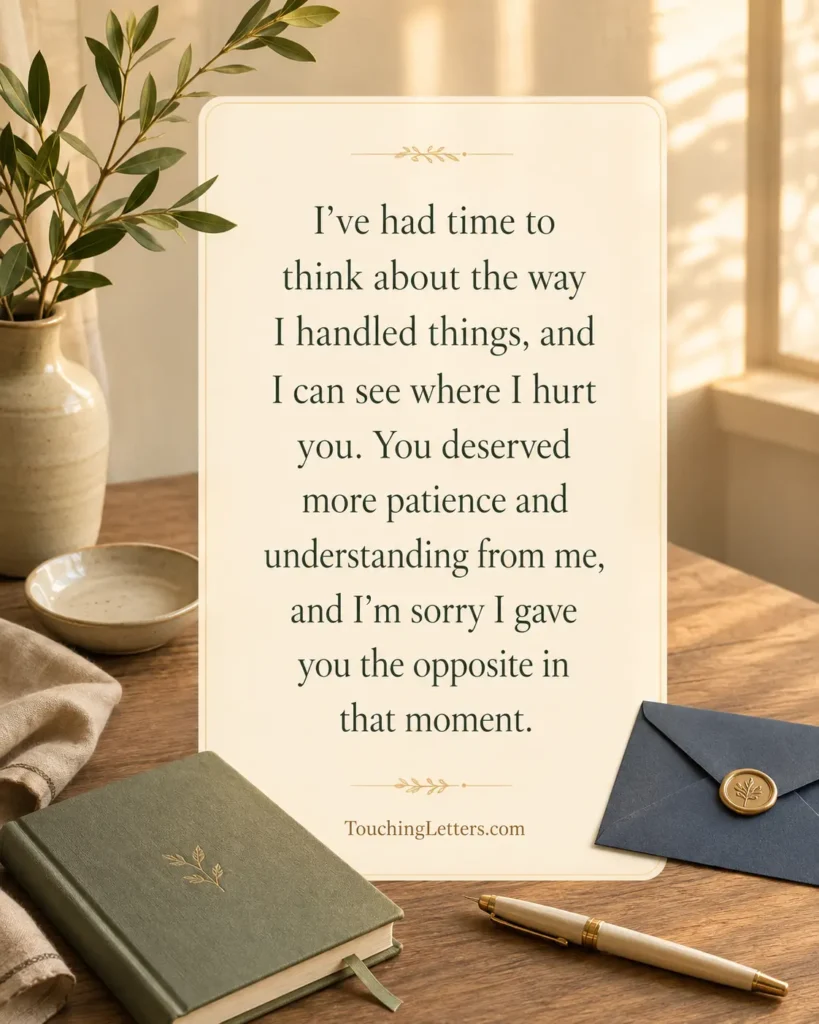
1. What I said was unfair, and I understand why it stayed with you. You were trying to talk to me, but instead of listening, I reacted from frustration. I care too much about us to pretend that moment did not matter. I’m sorry for the way I handled it, and I want to become better at slowing down before I speak.
2. The more I think about our conversation, the more clearly I see where I hurt you. My defensiveness made your feelings seem less important than my need to explain myself. That was not fair. You deserved to feel heard, and I’m sorry I made that harder instead.
3. There was no good reason for me to speak to you with that much impatience. Stress may explain where my mood came from, but it does not excuse how I treated you. I’m sorry for letting my frustration land on someone I love. Next time, I want to communicate what I’m feeling without making you carry it.
4. You trusted me enough to be honest about how you felt, and my response was dismissive. I understand why that hurt. Your feelings deserved respect even when I saw the situation differently. I’m sorry for making you feel like your perspective did not matter.
5. My reaction was bigger and harsher than the situation called for. Instead of pausing, I let emotion take over and said things that made the moment more painful. I regret that deeply. You deserved a calmer version of me, and I want to work on giving you that.
6. It took me some quiet time to realize how unfair my assumption was. I decided what you meant before giving you a real chance to explain yourself. That put you in a position where you had to defend something you had not even intended. I’m sorry for judging the moment instead of listening to you.
7. I hate that my behavior made you feel less valued than you are. You matter to me, and my actions should have reflected that more clearly. I’m sorry for being careless with your feelings. I want the way I treat you to match the respect and affection I genuinely have for you.
8. There are times when being right matters far less than being kind, and I forgot that in the moment. I pushed my point instead of trying to understand yours. That was my mistake. I’m sorry for turning a conversation into something that left you feeling hurt.
9. You showed me patience, and I answered it with frustration. Looking back, that imbalance bothers me because you did not deserve it. I’m sorry for the sharpness in my voice and the way I closed myself off. I want to handle difficult moments with more care.
10. Nothing about my apology is meant to rush you past what happened. I simply want you to know that I see my part clearly. I hurt you with the way I spoke and reacted, and I regret it. Take whatever time you need; I will still mean these words when the moment is less raw.
11. I should have asked what you meant instead of assuming the worst. My reaction came before understanding, and that made you feel blamed for something you were trying to explain. I’m sorry. You deserved curiosity and trust from me, not a conclusion I had already decided on.
12. The distance between us right now reminds me that words have consequences even when they are spoken quickly. I regret using mine carelessly. You did not deserve the harshness I gave you, and I’m sorry for creating hurt where there should have been respect.
13. My mistake was not only what I said, but how little room I gave you to respond. I interrupted, defended myself, and made it harder for you to feel understood. That is something I need to own. I’m sorry, and I want to listen differently when we talk again.
14. Your feelings do not become less valid just because I did not understand them immediately. I acted as though my view of the situation was the only one that mattered, and I can see how painful that must have felt. I’m sorry for that lack of consideration.
15. I care about the trust between us, which is why I do not want to brush this aside with a quick apology. My behavior disappointed you, and I understand why. I’m sorry for the way I handled things, and I want my future actions to show that I learned from it.
16. This message is simply something I needed to say clearly: I was wrong in the way I treated you. No excuse changes that. You deserved more patience and respect from me, and I’m sorry I did not give you either in that moment.
Romantic Ways to Say Sorry to Him
1. I miss the warmth between us, but I know closeness cannot be rushed past an apology. My words created some of this distance, and I’m sorry for that. I love you, and I want to rebuild the softness between us with more care.
2. Before the day ends, I need to own the way I spoke to you. My tone was unfair, and affection does not excuse it. I’m sorry, love. I hope tonight gives us both a little peace, and we can talk more gently when we are ready.
3. Your smile is one of my favorite things, but I know I do not get to ask for it while ignoring the hurt I caused. I’m sorry for being impatient with you. More than anything, I want to treat your heart with the tenderness I feel for you.
4. Being close to you means a lot to me, which is why I need to acknowledge when my behavior creates distance between us. Instead of listening, I became defensive, and I’m sorry for that. What I want now is for our next conversation to feel safer, calmer, and more understanding.
5. If you want one when we see each other, I would love to give you a long hug. Before that, though, I need to say this clearly: I handled our conversation badly, and your feelings deserved more care from me.
6. The affection I feel for you does not cancel the mistake I made. I dismissed something that mattered to you, and I understand why that hurt. I’m sorry, sweetheart. Loving you should make me more attentive, not less.
7. I wish our evening had ended with laughter instead of tension, but I know my reaction helped create that distance. I’m sorry for speaking too quickly and listening too little. I care about getting this right more than pretending nothing happened.
8. Being in love with you means I want our difficult moments to be handled with respect too. I fell short of that today. My response was sharp and unfair, and I’m sorry. You deserve tenderness even when we disagree.
9. There is a part of me that wants to skip straight back to our usual closeness, but I know repair starts with honesty. I hurt your feelings by reacting carelessly. I’m sorry, and I am willing to give this the time it needs.
10. I still feel all the love I felt before our argument, but now it comes with an important realization: I could have treated you better in that moment. I’m sorry for letting frustration speak louder than affection.
11. Tonight, I am thinking less about being right and more about how my words landed on someone I love. They were too harsh. I’m sorry, and I hope the next words we share with each other carry more patience.
12. You deserve to feel loved not only when everything is easy, but also when we are frustrated with each other. I did not show that well today. My tone was hurtful, and I’m sorry for bringing that into our relationship.
13. The closeness we share matters deeply to me, which is why I want to take responsibility for the distance I created. I shut you out when I should have communicated. I’m sorry. I want to find our way back to warmth without pretending the hurt was insignificant.
14. Loving you makes this apology more meaningful, not less necessary. I reacted unfairly and left you feeling unheard. I’m sorry, my love. I want affection between us to be supported by respect, especially when conversations become difficult.
Deep Apology Messages to Make Him Cry
1. One of the hardest things to admit is that I made you feel unseen when you were standing right in front of me trying to explain your feelings. I was too focused on defending myself to recognize what you needed from me. I’m sorry. You deserved my attention, not another reason to feel alone in the conversation.
2. Trust is built in ordinary moments, and I treated one of those moments carelessly. I gave you my word and did not follow through. What hurts me most is realizing that the disappointment was avoidable. I’m sorry for making you question whether you could rely on me.
3. Pride got between us when humility would have served us better. I knew the conversation was hurting you, yet I kept arguing because admitting I was wrong felt uncomfortable. That was immature of me. I’m sorry for choosing my pride over the chance to understand you.
4. You deserved a calmer response than the one I gave you. Nothing you said required the sharpness in my voice or the impatience I showed. I can see how my reaction changed the entire feeling of the moment. I’m sorry for making a difficult conversation more painful.
5. There is one part of our conversation I keep returning to: the moment you became quiet after what I said. I understand now that my words reached deeper than I intended. Intent does not erase that hurt. I’m sorry for speaking without enough care.
6. Your patience has carried more of our difficult moments than I realized. Sometimes you waited while I calmed down, explained yourself twice, or gave me room to think. I did not always recognize the kindness in that. I’m sorry for receiving your patience without offering enough of my own.
7. Some words cannot simply be erased because an apology follows them. I understand that. What I said was unfair, and I know you may still hear it in your mind for a while. I’m sorry for putting those words there. I want to be much more responsible with what I say when I am angry.
8. I do not want to punish myself to prove that I regret hurting you. I would rather take responsibility and change something meaningful. My reaction was dismissive, and you deserved better. I’m sorry. I want this lesson to show up in the way I listen to you from now on.
9. It hurts to realize that I made the person I care about feel unimportant. My behavior sent a message I never wanted to send, but that does not mean the impact disappears. I’m sorry for being distracted and careless when you needed presence from me.
10. You have every right to need time after what happened. My apology is not a request for you to immediately make me feel better about my mistake. I simply want you to know that I understand why you were hurt, and I am sincerely sorry for my part in it.
11. Something became clear to me after the emotion settled: you were not asking me to agree with every feeling you had. You were asking me to respect that those feelings were real. I failed to do that. I’m sorry for making you feel dismissed when you were trying to be honest with me.
12. Whether forgiveness comes quickly or slowly, I want this apology to remain the same. I spoke unfairly, reacted without enough thought, and hurt someone I deeply care about. I’m sorry. There is no deadline attached to these words; I simply wanted to give you the truth you deserve.
Sorry Messages for Him After a Fight
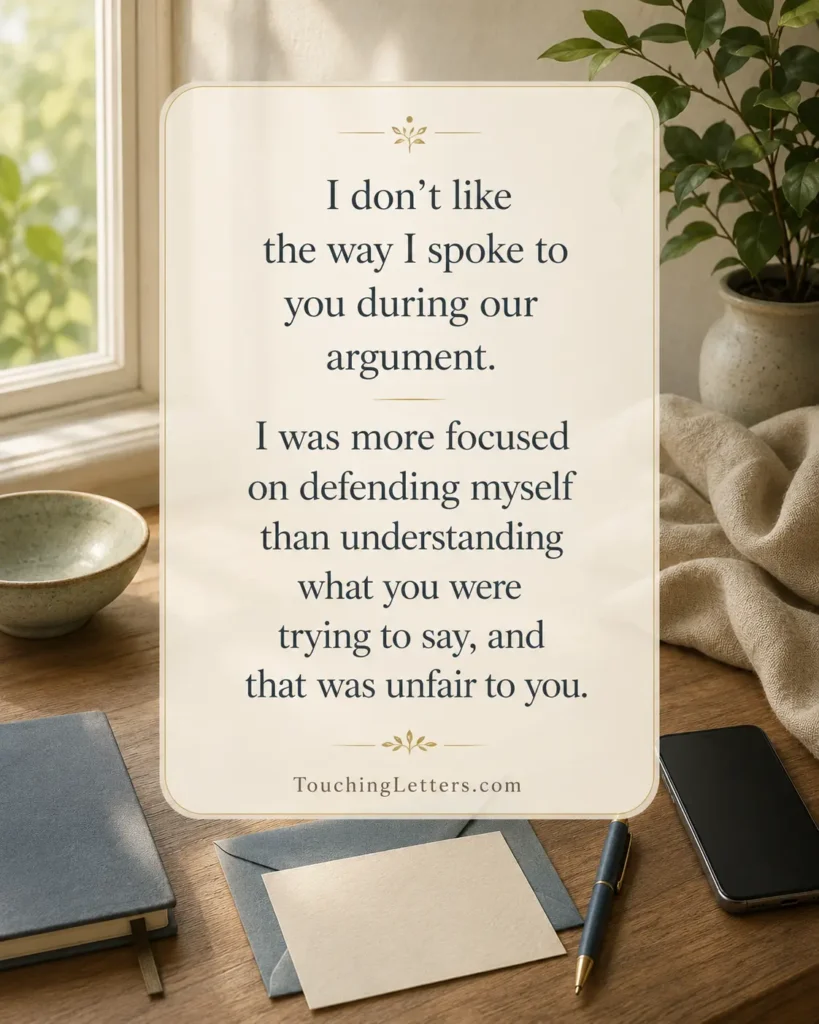
1. During our argument, I let anger choose my words for me. Some of what I said was harsher than what I truly wanted to communicate. I’m sorry for speaking that way. Even when we disagree, you deserve to be spoken to with respect.
2. I kept interrupting because I was focused on defending my side instead of hearing yours. That made the argument more frustrating and probably left you feeling ignored. I’m sorry. When we talk again, I want to listen all the way through before I respond.
3. Bringing up an old issue in the middle of our fight was unfair. It had nothing to do with what we were trying to solve, and I used it because I was upset. I regret that choice. You deserved a conversation about the present, not a list of past frustrations.
4. My tone made the disagreement much more hostile than it needed to be. Even if I felt strongly about what we were discussing, raising my voice and becoming sharp did not help either of us. I’m sorry for adding heat instead of clarity.
5. I assumed the worst about your intentions without giving you space to explain them. That turned a misunderstanding into a bigger fight. My reaction was unfair to you, and I’m sorry. I should have asked questions before deciding what you meant.
6. Stubbornness kept me arguing long after I should have stopped and listened. I became more interested in proving my point than understanding yours. That is not how I want us to handle conflict. I’m sorry for making the conversation harder than it needed to be.
7. Walking away the way I did left the conversation unfinished and probably made you feel shut out. Taking a break would have been fine, but I should have communicated that instead of disappearing in frustration. I’m sorry for handling that moment carelessly.
8. Stress was already sitting heavily on me before we started talking, and I allowed it to shape the way I responded to you. That was my responsibility, not yours. I’m sorry for letting outside pressure turn into impatience during our argument.
9. I became defensive the moment you told me what bothered you. Instead of hearing the concern underneath your words, I treated it like an attack. That stopped us from having the conversation we actually needed. I’m sorry for closing myself off.
10. The argument became bigger because I kept pushing when a calmer response would have helped. I can see now that I was reacting to every sentence instead of trying to understand the whole point. I’m sorry for my part in escalating things.
11. Trying to “win” our disagreement was a mistake. The person I love should never feel like an opponent I have to defeat in a conversation. I’m sorry for approaching our fight that way. I would rather understand you than score a point against you.
12. My words came out with more anger than honesty, and that matters. I could have expressed the same frustration without hurting you. I’m sorry for choosing a harsh delivery when a thoughtful one was available to me.
13. I misread what you were trying to say and reacted before checking whether I understood you correctly. That created tension neither of us needed. I’m sorry for jumping to a conclusion instead of giving you the benefit of a real conversation.
14. When we speak again, I want to come back to the issue calmly and take responsibility for the way I handled my side of the fight. I’m sorry for the interruptions, the defensive tone, and the impatience. You deserve a better conversation than the one I gave you.
Apology Messages for Hurting His Feelings
1. My comment was dismissive, and I understand why it made you feel like I was not taking you seriously. What mattered to you should have mattered enough for me to respond thoughtfully. I’m sorry for brushing it aside.
2. That joke crossed a line. I may have intended it lightly, but I can see that it touched something personal and made you uncomfortable. I’m sorry for being careless with a subject I should have treated with more sensitivity.
3. The tone I used was harsher than the situation deserved. Even if my point mattered to me, I could have made it without speaking to you that way. I’m sorry for making you feel disrespected.
4. By barely responding when you were trying to talk to me, I made you feel ignored. That was unfair. I should have either listened properly or told you I needed a moment instead of giving you cold, distracted answers.
5. I minimized what you were feeling because I did not understand it immediately. That was wrong. Your emotions did not need my approval to be real. I’m sorry for making you feel like you had to justify why something affected you.
6. You were telling me something important, and I kept interrupting instead of listening. I understand how frustrating and lonely that must have felt. I’m sorry for treating your words like something I needed to compete with rather than hear.
7. I embarrassed you with what I said in front of other people, and I can see why that hurt. Even though it was not my intention to humiliate you, I should have been more thoughtful. I’m sorry for putting you in that position.
8. Breaking that small promise may have looked minor from the outside, but I understand why it mattered to you. I gave you a reason to expect something from me and then did not follow through. I’m sorry for letting you down.
9. I canceled our plans too casually and did not stop to consider how that might make you feel. Your time matters, and so does the effort you made. I’m sorry for treating the situation as though it were insignificant.
10. Forgetting something that was meaningful to you made it seem as though I had not been paying attention. I understand why that stung. I’m sorry for being careless with something you trusted me to remember.
11. My cold behavior made you feel shut out when I should have told you what was going on. You did not deserve silence that left you guessing. I’m sorry for creating distance instead of communicating honestly.
12. I criticized you in a way that was unfair and much sharper than necessary. There was a better way to express what was bothering me. I’m sorry for making the conversation feel like an attack rather than something we could work through together.
13. Bringing up something you feel insecure about was thoughtless, especially during a tense moment. I understand why that felt personal and hurtful. I’m sorry for using a sensitive subject when I should have protected it.
14. My behavior made you feel taken for granted, and I do not want to dismiss that just because it was not my intention. I should have shown more appreciation and consideration. I’m sorry for making your effort feel unnoticed.
Short Sorry Messages for Him
1. I spoke unfairly, and you deserved better from me. I’m sorry for the way I handled that moment.
2. My reaction was too harsh. I understand why it hurt, and I regret speaking to you that way.
3. You were trying to explain yourself, and I interrupted instead of listening. I’m sorry.
4. I made an unfair assumption about you. I should have asked before reacting.
5. My tone was disrespectful, even if that was not what I intended. I’m sorry for it.
6. I let frustration spill onto you today. That was mine to manage, not yours.
7. You deserved my attention, and I was dismissive instead. I’m sorry for making you feel unheard.
8. I handled our disagreement badly. Next time, I want to listen before defending myself.
9. Breaking my promise disappointed you, and I understand why. I’m sorry for not following through.
10. My joke crossed a line. I should have been more sensitive about something personal to you.
11. I care about you, and I regret letting impatience create distance between us.
12. That conversation deserved more kindness from me. I’m sorry for adding hurt instead.
13. I should have believed your explanation before jumping to conclusions. My reaction was not fair to you.
14. Being stressed did not justify being short with you. I’m sorry for taking my mood out on you.
15. I made you feel unimportant, and I regret that. You deserved more care from me.
16. No pressure to answer right away. I just wanted you to know that I see my mistake and I’m sincerely sorry.
A meaningful apology becomes more personal when it reflects what actually happened. Name the words or behavior you regret, recognize how they may have affected him, explain what you understand differently now, and include one realistic change you intend to make. Sincerity matters more than dramatic language.